The Australian Reality
The Science of Food
& Your Reproductive System
Every egg that will be retrieved in your IVF cycle, or that will ovulate naturally this month, has been developing inside its follicle for approximately 90 days. During that entire window, it is bathed in follicular fluid — a microenvironment whose composition is directly shaped by what you eat, drink, and absorb.
Research published in Human Reproduction has demonstrated that follicular fluid concentrations of antioxidants, omega-3 fatty acids, and key micronutrients are significantly associated with fertilisation rates, embryo quality, and live birth outcomes.
For sperm, the renewal cycle is 74 days. Every dietary and lifestyle change you make today will be reflected in a semen analysis in approximately 2.5 months.
The goal is not a restrictive "fertility diet." It is building a nutritional environment so rich in the raw materials for reproduction that your body can do what it is designed to do.
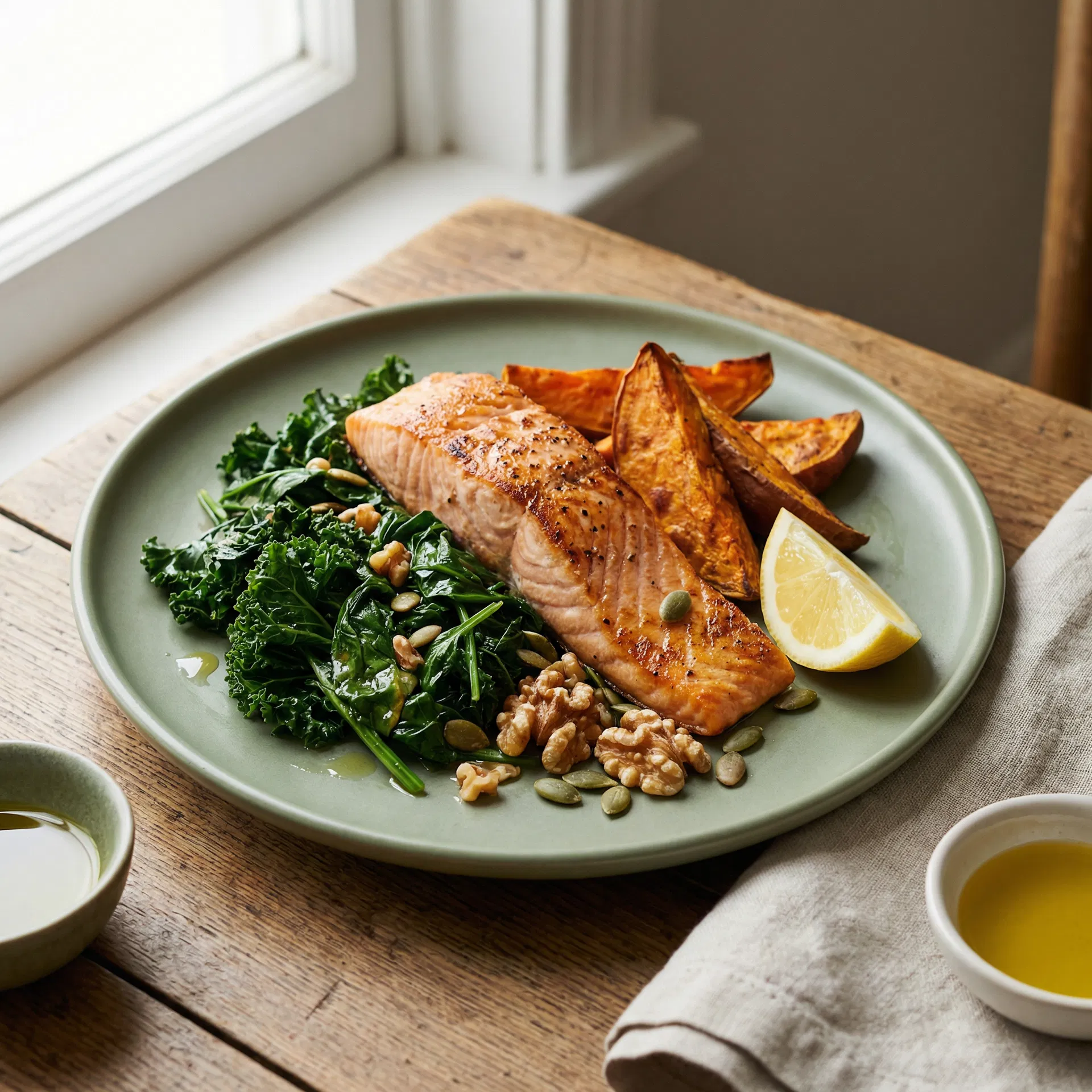
A fertility-optimised meal: wild salmon, dark leafy greens, sweet potato, walnuts, and pumpkin seeds
Blood Sugar & Insulin:
The Most Underestimated Fertility Factor
Insulin is not just a diabetes hormone. In the context of fertility, it is one of the most powerful modulators of reproductive function. When blood sugar is chronically elevated — even in the "normal" range — the resulting insulin resistance creates a cascade of hormonal disruption that directly impairs ovulation.
Elevated insulin stimulates the ovaries to produce excess androgens, which disrupts follicular development and can prevent ovulation entirely. This is the primary mechanism behind PCOS-related anovulation — but insulin resistance exists on a spectrum.
The Meal Sequencing Principle
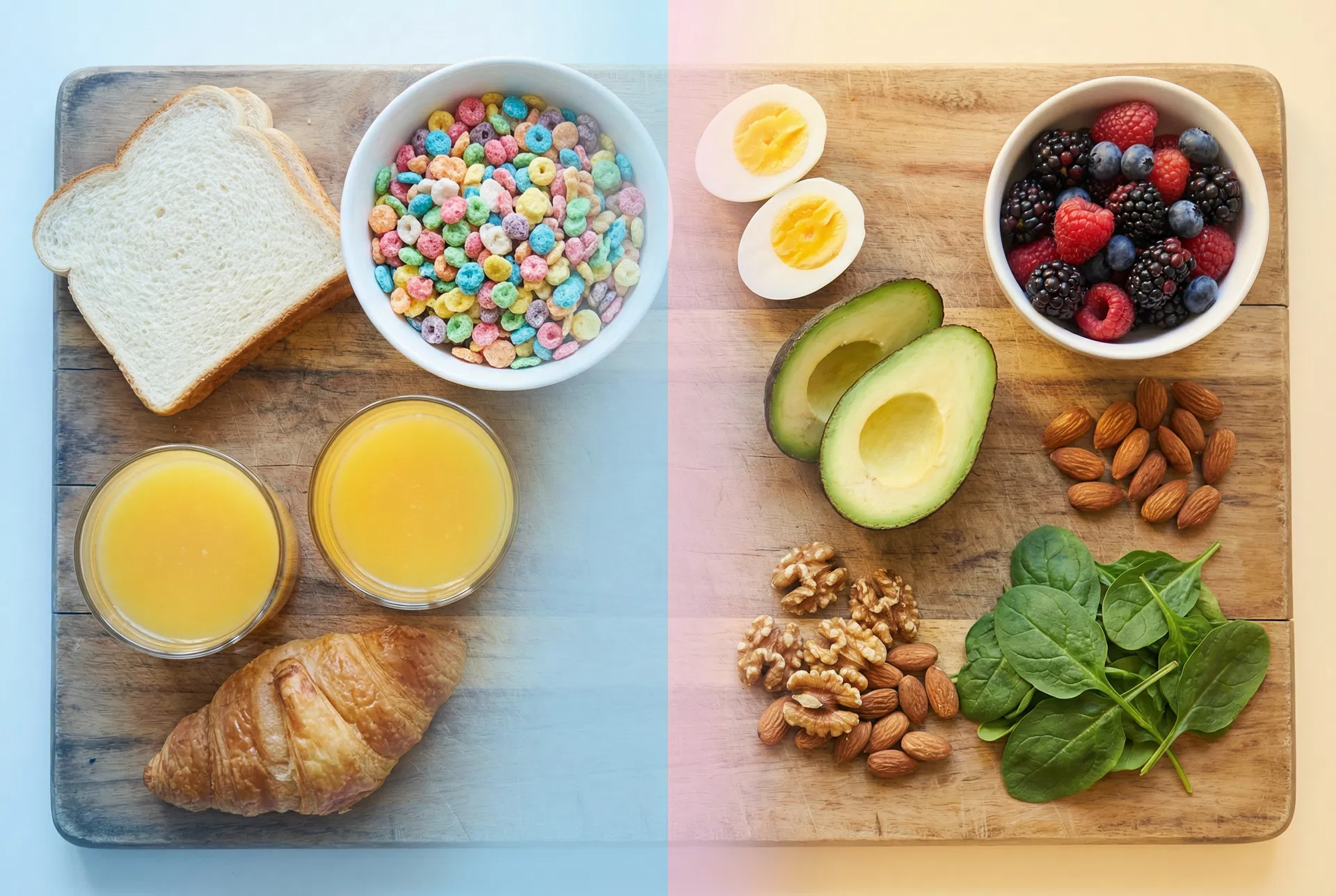
Start with vegetables or salad (fibre coats the intestinal wall, slowing glucose absorption)
Eat protein and fat next (further blunts the glucose response)
Eat carbohydrates last (glucose spike reduced by up to 73% in research studies)
The Anti-Inflammatory
Fertility Kitchen
Chronic low-grade inflammation is a significant but often overlooked driver of fertility challenges. It impairs ovulation, disrupts implantation, contributes to endometriosis progression, and damages sperm DNA.
Wild Salmon
Omega-3 DHA/EPA — reduces pelvic inflammation, supports embryo development
Blueberries
Anthocyanins — protect egg DNA from oxidative damage
Walnuts
ALA omega-3 + melatonin — supports egg quality and sleep
Turmeric
Curcumin — reduces endometrial inflammation, supports implantation
Spinach
Folate + iron — essential for ovulation and early embryo development
Avocado
Monounsaturated fats + vitamin E — supports follicular fluid quality
Brazil Nuts
Selenium — protects sperm and egg DNA, supports thyroid function
Extra Virgin Olive Oil
Oleocanthal — anti-inflammatory comparable to low-dose ibuprofen
⚠️ Foods That Drive Inflammation — Reduce or Eliminate
Build Your
Fertility Plate
Tap each segment to learn what belongs on your plate, why it matters, and which specific foods to prioritise.
Click any segment of the plate to explore what to eat, why it matters, and which foods to prioritise.
The Key Nutrients
for Reproductive Health
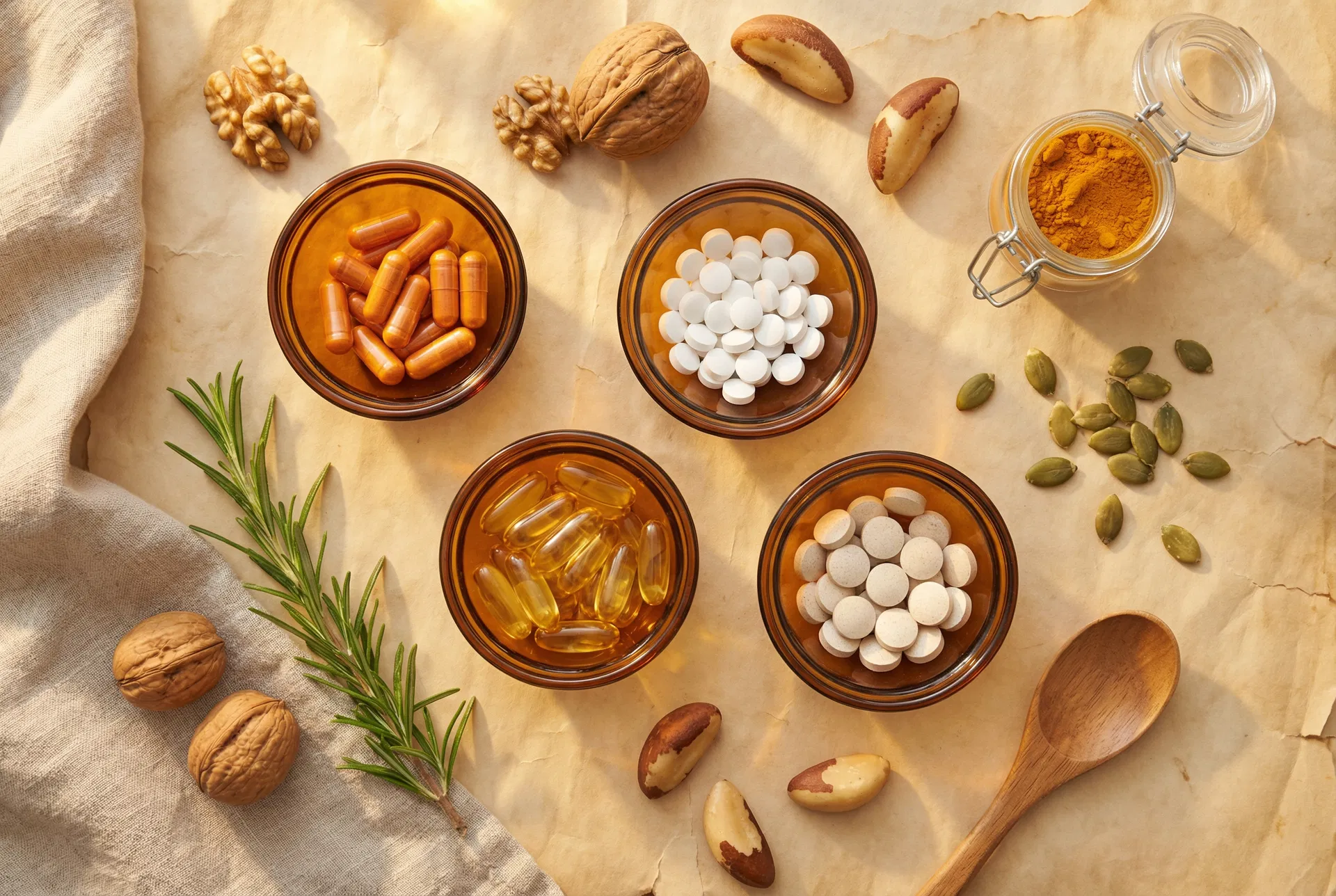
Methylated Folate (5-MTHF)
DNA synthesis, neural tube development, homocysteine metabolism
Sources: Dark leafy greens, legumes, liver
💡 Prefer methylated form — up to 40% of people have MTHFR variants
CoQ10 (Ubiquinol)
Mitochondrial energy in eggs and sperm, antioxidant protection
Sources: Organ meats, sardines, beef
💡 Supplement 200–600mg/day with a fat-containing meal
Omega-3 DHA/EPA
Follicular fluid quality, embryo development, anti-inflammation
Sources: Wild salmon, sardines, mackerel, anchovies
💡 Aim for 2g combined DHA+EPA daily from food and/or supplement
Vitamin D3
Ovarian reserve, implantation, immune modulation
Sources: Sunlight, fatty fish, egg yolks
💡 Test serum 25-OH-D — fertility optimal range is 100–150 nmol/L
Zinc
Ovulation, progesterone production, sperm morphology
Sources: Oysters, pumpkin seeds, beef, chickpeas
💡 Critical for both partners — zinc deficiency is common in Australian adults
Selenium
Thyroid function, egg and sperm DNA protection
Sources: 2 Brazil nuts daily provides adequate selenium
💡 Do not exceed 3 Brazil nuts daily — selenium toxicity is possible
Nutrition Through
Your IVF Journey
Each phase of an IVF cycle has distinct nutritional priorities. The principles below apply to all phases, but the specific focus shifts as you move through the protocol.
This Week's
Fertility Kitchen Checklist
Tick each item as you complete it. Focus on the Foundation items first — they create the biggest impact.
Foundation
Blood Sugar
Anti-Inflammatory
Nutrients
Medical
The Fertility Kitchen at a Glance
Medical Disclaimer
This guide is for educational purposes only and does not constitute medical advice. Always consult a qualified healthcare professional before making changes to your health regimen, particularly if you have existing medical conditions, are taking medications, or have been diagnosed with a fertility condition.
Key References
[1] Chavarro, J.E. et al. (2018). The Fertility Diet. Harvard Health Publishing.
[2] Gaskins, A.J. & Chavarro, J.E. (2018). Diet and fertility: a review. American Journal of Obstetrics and Gynecology, 218(4), 379–389.
[3] Ruder, E.H. et al. (2014). Female dietary antioxidant intake and time to pregnancy. Fertility and Sterility, 101(3), 759–766.
[4] Showell, M.G. et al. (2020). Antioxidants for female subfertility. Cochrane Database of Systematic Reviews.
[5] Twigt, J.M. et al. (2012). The preconception diet and IVF/ICSI treatment. Human Reproduction, 27(8), 2526–2531.
[6] Vujkovic, M. et al. (2010). The preconception Mediterranean dietary pattern and IVF. Fertility and Sterility, 94(6), 2096–2101.
[7] Mínguez-Alarcón, L. et al. (2019). Fatty acid intake and reproductive hormones. Asian Journal of Andrology, 19(2), 184–190.