
The Biology
The 74-Day Window
A sperm cell takes approximately 74 days to develop from a primitive stem cell (spermatogonium) to a mature spermatozoon capable of fertilisation. This process occurs in three stages:
Sperm cells form and develop inside the seminiferous tubules of the testes. This is the stage most sensitive to heat, oxidative stress, and nutritional deficiency.
Sperm travel through the epididymis, acquiring motility and the ability to fertilise an egg. L-carnitine is concentrated here and is essential for this process.
Mature sperm are stored in the epididymis and ejaculated. The abstinence period (2–5 days) affects the proportion of fresh vs. older, more oxidatively damaged sperm.
The clinical implication: The semen analysis done at the start of an IVF cycle reflects the lifestyle and nutritional environment of 2–3 months ago. Starting the protocol at least 90 days before the planned retrieval date is essential for meaningful improvement.
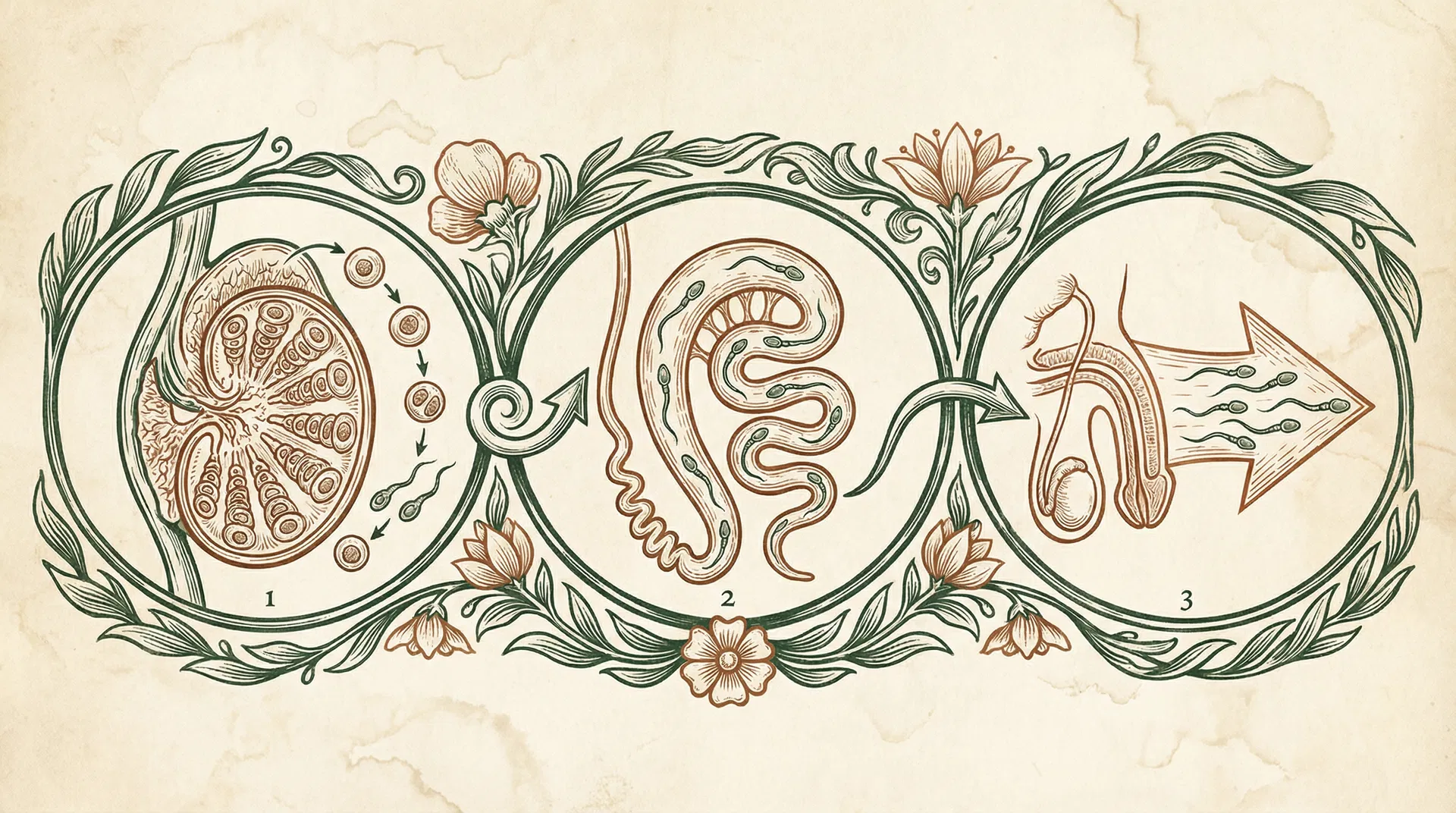
The three stages of sperm development — spermatogenesis, epididymal maturation, and ejaculation
Understanding Your Results
Semen Analysis Decoder
Tap any parameter to understand what it measures, what the fertility-optimal range is, and what it means if your result is outside that range.
If you have had ≥ 2 failed IVF cycles, ≥ 2 miscarriages, or have poor morphology on your SA, ask your practitioner to request a DNA Fragmentation Index (DFI) test. This requires a separate sample and is not included in a standard semen analysis.
Targeted Supplementation
Key Nutrients for Sperm Quality
Sperm are among the most metabolically active cells in the body and are highly vulnerable to oxidative damage. These nutrients address the specific mechanisms that drive poor sperm quality. Tap each one to see the clinical rationale and food sources.
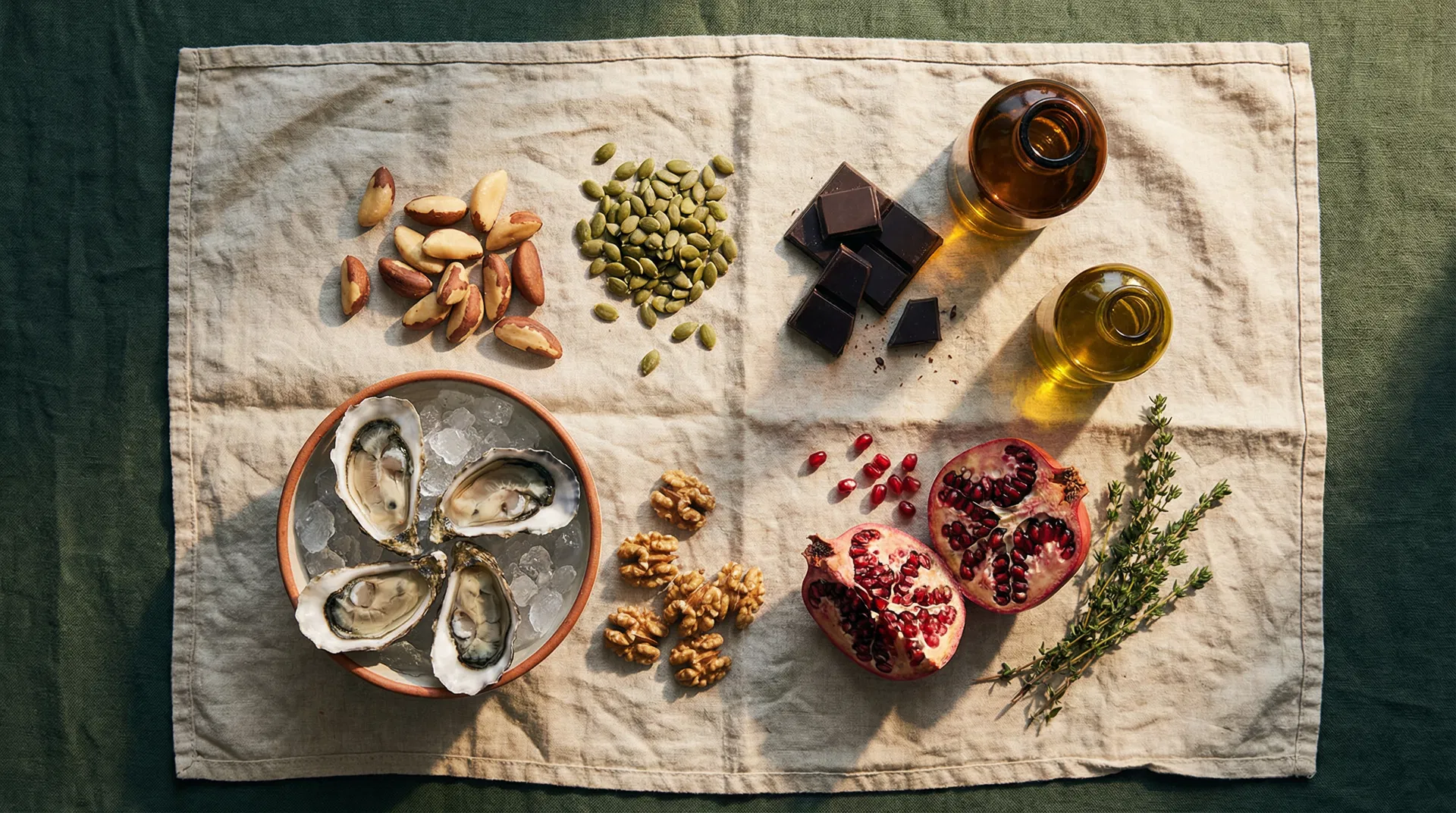
Sperm require enormous amounts of ATP (energy) for motility. CoQ10 is the primar...
Essential for testosterone production, sperm formation, and the structural integ...
Critical for the structural integrity of the sperm flagellum (tail). Selenium de...
The primary water-soluble antioxidant in seminal plasma. Protects sperm DNA from...
The primary fat-soluble antioxidant in sperm cell membranes. Protects the polyun...
Concentrated in the epididymis where sperm mature. Essential for sperm energy me...
Essential for sperm DNA synthesis and methylation. Men with the MTHFR gene varia...
A powerful carotenoid antioxidant concentrated in the testes. Reduces oxidative ...
Lifestyle Medicine
What Damages Sperm Quality
Lifestyle factors are often the most impactful and modifiable drivers of poor sperm quality. Tap each factor to understand the mechanism, the clinical significance, and the physiological context.

For IVF Patients
IVF & ICSI Preparation
What every male partner needs to know before an IVF or ICSI cycle.
Your Protocol
90-Day Action Plan
Tick each item as you implement it. Bring this to your next session to review progress with your practitioner.