80%
of PCOS cases involve insulin resistance
30–40%
glucose spike reduction from eating vegetables first
20–25%
insulin sensitivity reduction from one poor night's sleep
2–3×
higher anovulation risk with elevated fasting insulin
The Biology
How Insulin Resistance Impairs Fertility
Practical Strategies
6 Evidence-Based Food Strategies
🥦
Eat vegetables before grains
Viscous fibre from vegetables slows gastric emptying and glucose absorption, reducing postprandial glucose spike by 30–40%
🥚
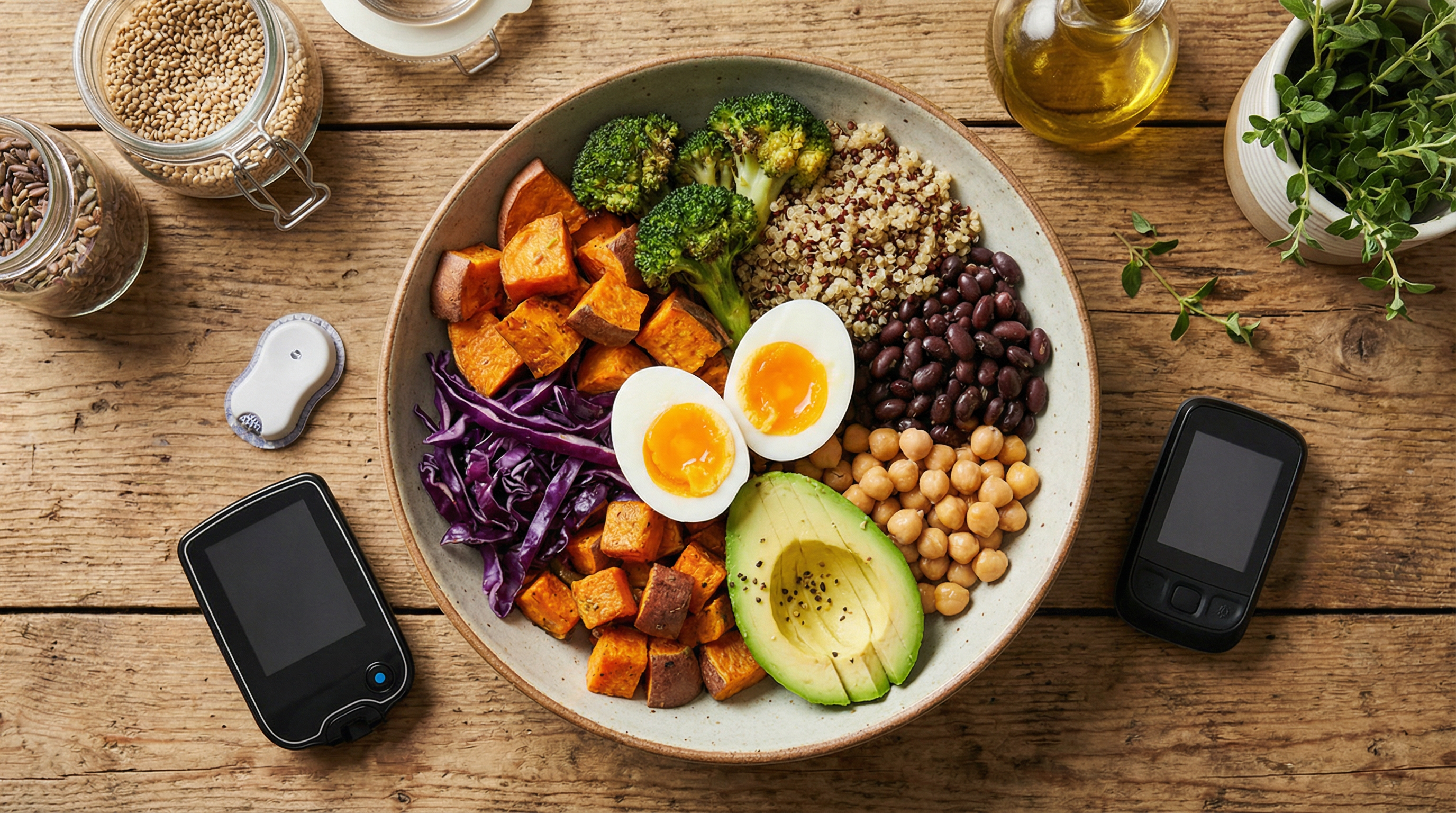
Pair every carbohydrate with protein or fat
Protein and fat slow gastric emptying and stimulate GLP-1 release, blunting the insulin response to carbohydrates
🍎
Avoid fruit juice — eat whole fruit
Whole fruit contains fibre that slows fructose absorption; juice delivers fructose rapidly, driving hepatic de novo lipogenesis and insulin resistance
🌅
Eat breakfast within 1 hour of waking
Skipping breakfast elevates cortisol and impairs insulin sensitivity throughout the day; a protein-rich breakfast stabilises blood glucose for 4–6 hours
🚶
Walk 10–15 minutes after meals
Post-meal walking activates GLUT4 in skeletal muscle, clearing glucose from the bloodstream without requiring insulin — reducing the postprandial spike by up to 30%
🌾
Choose low-GI complex carbohydrates
Quinoa, sweet potato, legumes, and oats release glucose slowly; white bread, white rice, and ultra-processed foods cause rapid spikes
Blood Sugar & Insulin Resistance — Quick Reference
One-page PDF cheat sheet · Supplement doses, food priorities & action steps
Your Protocol
Action Plan
Progress: 0/15 items (0%)