
Woman charting BBT
B.Nourishd Patient Guide

Cycle

Decoder

Your BBT chart is the most powerful diagnostic tool you own. Learn to read it — and give your practitioner the data they need to personalise your protocol.

SCROLL

3 cycles
minimum to chart before drawing conclusions
0.2°C
minimum thermal shift to confirm ovulation
12–16 days
ideal luteal phase length
90 days
BBT data your practitioner needs for your protocol
01

Why BBT Charting Changes Everything

A blood test gives you a single snapshot in time. Your BBT chart gives your practitioner a 28-day hormonal movie — showing exactly how your follicular development, ovulation, and luteal phase are functioning in real life, not just on one day in a clinic.

Three cycles of charting gives your practitioner a longitudinal view of your HPO axis function — revealing patterns in follicular development, ovulation quality, corpus luteum output, and endometrial preparation that no single blood test can capture.
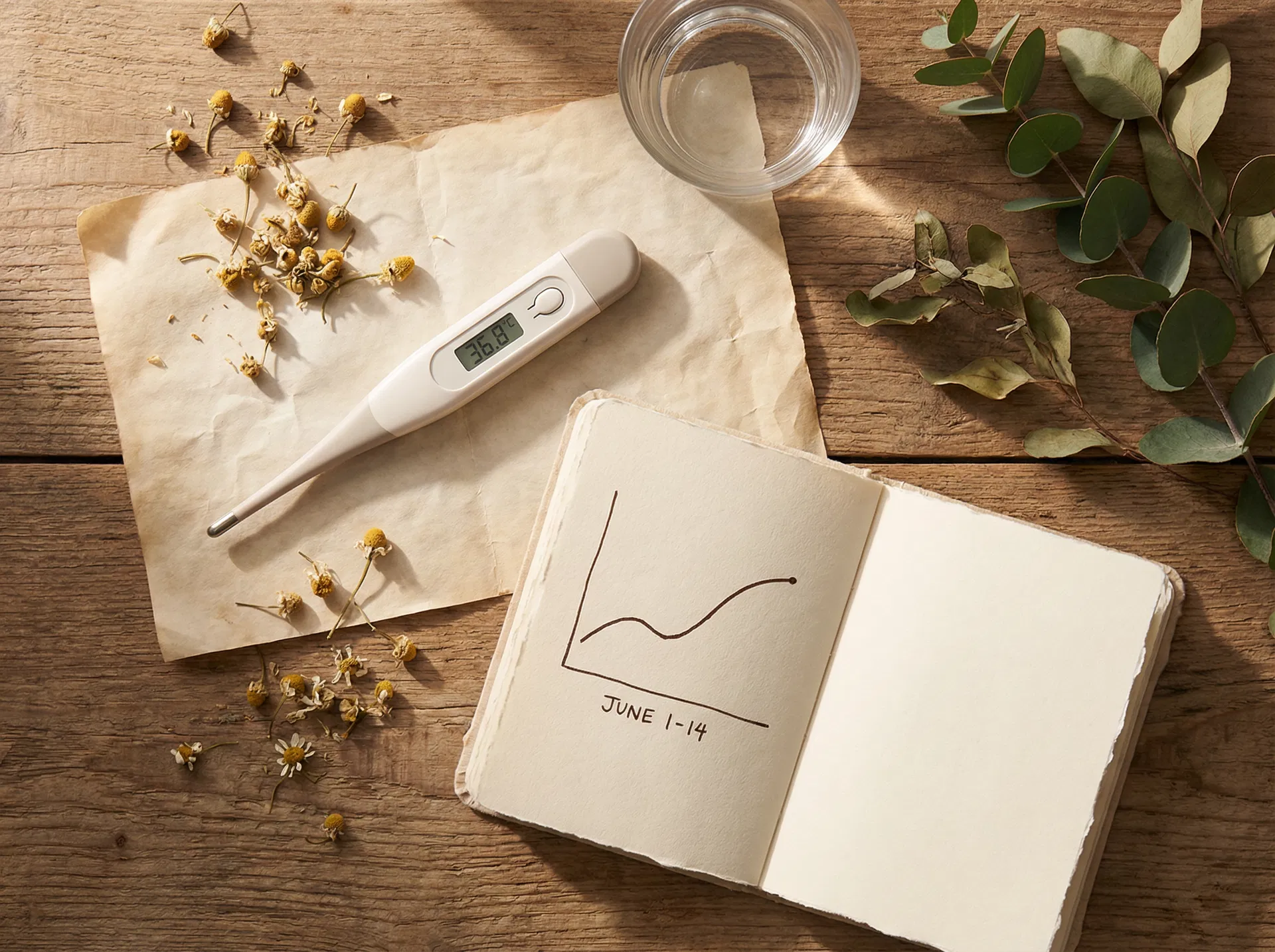
Confirms ovulation occurred
Reveals luteal phase length
Identifies progesterone issues
Tracks treatment response
Times the fertile window
Guides blood test timing
02

The Four Phases of Your Cycle

Select each phase to explore the hormonal activity, BBT pattern, and what your practitioner looks for.

Menstruation

Days 1–5Season: Winter

Hormonal context: Oestrogen and progesterone at their lowest — the body sheds and renews the endometrial lining.

BBT Pattern

36.1–36.4°C

BBT drops sharply — this confirms progesterone has fallen and menstruation begins. A sustained drop after a high luteal phase is a healthy sign.

Hormonal Activity

Oestrogen & progesterone at their lowest

Energy & Mood

Rest, restore, reflect

Phase Nutrition

  • Iron-rich foods (red meat, legumes, leafy greens)
  • Warming soups and broths
  • Dark berries for antioxidant support
  • Avoid cold, raw foods

Tell Your Practitioner

  • !Heavy bleeding (soaking >1 pad/hour)
  • !Severe cramping requiring medication
  • !Clots larger than a 50-cent piece
  • !Cycle shorter than 21 days
Four phases of the cycle represented by botanicals
03

The Interactive BBT Chart

Hover or tap any data point to decode what is happening hormonally on that cycle day. This is a healthy, textbook 28-day cycle.

Watch: How to Take Your BBT
menstruation
follicular
ovulation
luteal
Coverline (36.45°C)
36.036.236.436.636.837.0CL1235791113141517192123252728Cycle Day

Hover or tap any data point on the chart above to decode what is happening on that cycle day.

04

Reading the Signs

Learn to distinguish a healthy chart from one that signals an issue worth discussing with your practitioner.

Healthy Signs

Clear biphasic pattern

Distinct low phase (follicular) and high phase (luteal) separated by a thermal shift of ≥0.2°C.

Thermal shift sustained 3+ days

Temperatures remain elevated for at least 3 consecutive days after the shift, confirming ovulation.

Luteal phase 12–16 days

A luteal phase of 12–16 days indicates healthy progesterone production and adequate implantation window.

Stable follicular phase temps

Low, relatively consistent temperatures in the follicular phase suggest good follicular development.

Egg-white mucus before the shift

Peak-quality cervical mucus in the 2–3 days before the thermal shift confirms the fertile window.

Temperatures stay high past Day 18

If temperatures remain elevated beyond 18 days post-shift, this is a strong early pregnancy indicator.

Tell Your Practitioner

No thermal shift

A monophasic chart (no temperature rise) may indicate anovulation. Requires investigation — thyroid, PCOS, and stress are common causes.

Shift less than 0.2°C

A weak or gradual shift may indicate low progesterone or poor corpus luteum function.

Luteal phase under 10 days

A short luteal phase (luteal phase defect) leaves insufficient time for implantation. Often linked to low progesterone.

Erratic temperatures throughout

Highly variable temps across the whole cycle may indicate thyroid dysfunction, poor sleep, or illness — not just cycle issues.

Spotting 3+ days before period

Pre-menstrual spotting in the luteal phase often indicates progesterone insufficiency and warrants a Day 21 progesterone test.

Temperatures drop before Day 12 post-shift

An early luteal phase temperature drop suggests the corpus luteum is regressing too quickly — a key sign to share with your practitioner.

05

Getting Started with Fertility Friend

Fertility Friend is the free app your practitioner recommends for BBT charting. The free version has everything you need. Follow these six steps to set it up correctly from Day 1.
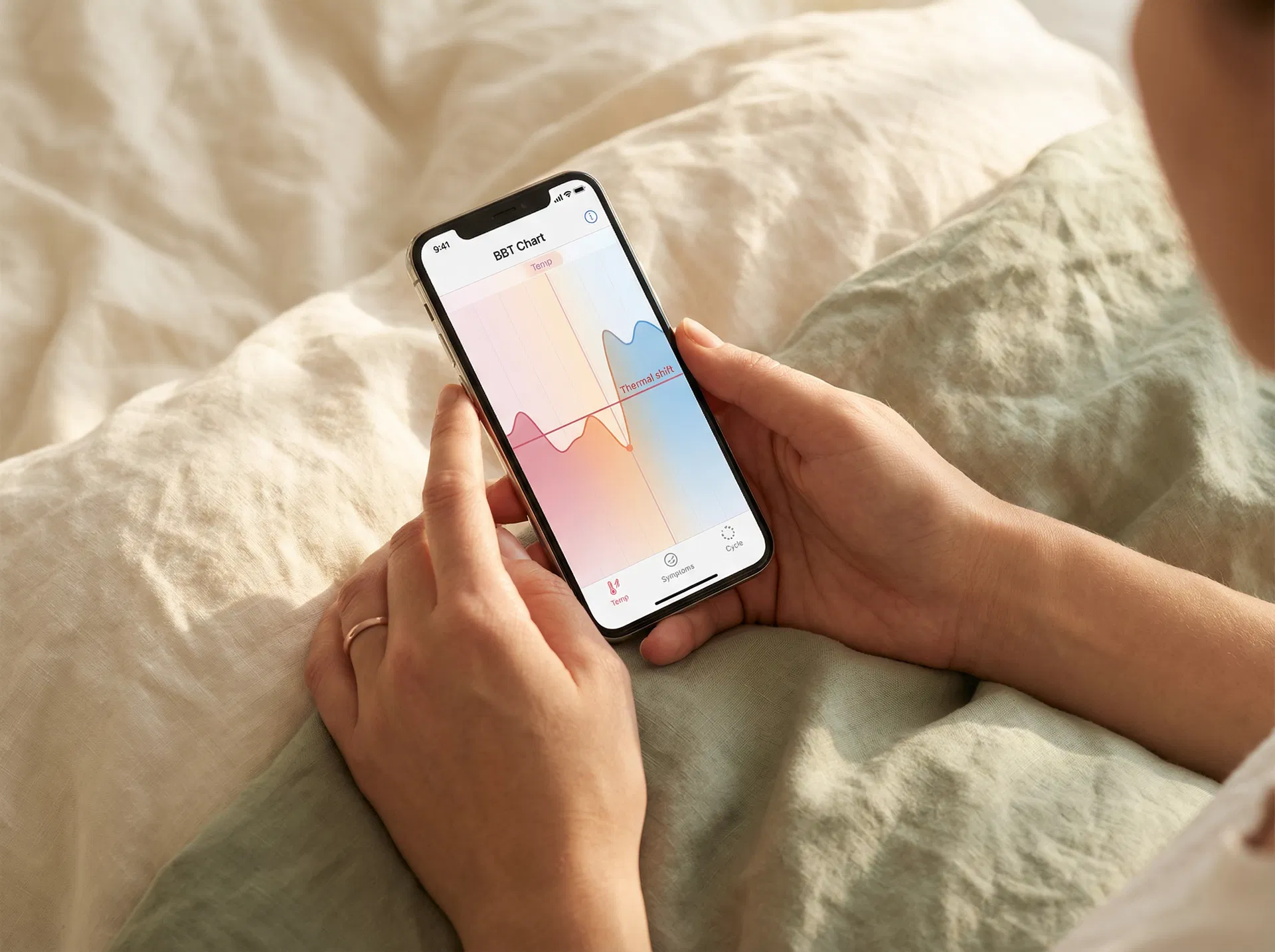
Fertility Friend app on phone
01

Download Fertility Friend

Available free on iOS and Android. Create an account — the free version is sufficient for BBT charting. You do not need to upgrade to VIP.

Visit Fertility Friend
02

Set your cycle start date

Enter Day 1 as the first day of full flow (not spotting). This anchors your entire chart to the correct cycle day.

03

Take your temperature correctly

Take your BBT every morning at the same time, immediately upon waking, before getting out of bed or speaking. Use a BBT-specific thermometer (2 decimal places). Record even if you slept poorly — note it in the app.

Watch: How to Take Your BBT
04

Log your temperature daily

Enter your temperature in the app each morning. Tap the temperature field and enter your reading. The app will begin plotting your chart automatically.

05

Add observations

Log cervical mucus (dry, sticky, creamy, watery, egg-white), cervical position if you check it, and any relevant symptoms (cramping, spotting, illness, alcohol, poor sleep). These notes are invaluable for your practitioner.

06

Share your chart

Your practitioner can view your chart via the sharing feature. Go to Settings → Chart Sharing and share the link. Bring your chart to every session — it tells a story no blood test can.

Visit Fertility Friend
06

What Your Practitioner Looks For

Your BBT chart is reviewed at every coaching session. Here is what your practitioner is specifically analysing — and why it matters for your protocol.

🌡️

Follicular phase temperature stability

Erratic low-phase temps can indicate thyroid dysfunction, poor sleep quality, or adrenal stress — all of which impair follicular development.

📈

Quality of the thermal shift

The speed and magnitude of the shift reveals progesterone output. A slow, gradual rise suggests the corpus luteum is underperforming.

📅

Luteal phase length

A luteal phase under 10 days is a luteal phase defect. This is one of the most common and most treatable causes of implantation failure.

🩸

Pre-menstrual spotting pattern

Spotting 3+ days before full flow in the luteal phase is a progesterone insufficiency signal. Herbal and nutritional support can significantly improve this.

🌿

Response to treatment

After 1–2 cycles on a targeted protocol, your chart should show measurable improvement — a clearer shift, longer luteal phase, or reduced spotting. The chart is your progress report.

🔄

Cycle length consistency

Highly variable cycle lengths (>5 days variation) suggest HPO axis dysregulation. This is common in PCOS, high stress, and perimenopause.

Cycle Decoder — Quick Reference
One-page PDF cheat sheet · Supplement doses, food priorities & action steps
Download PDF
07

Your Action Plan

Tick each item as you complete it. Bring this checklist to your next coaching session.

Progress0 / 18
Watch Before You Start
How to Take Your BBT Correctly — video tutorial

Setup

Download Fertility Friend (free) on your phone
Purchase a BBT thermometer (2 decimal places — e.g., Femometer or Basal Body Thermometer)
Set your phone alarm for the same time every morning (even weekends)

Charting

Take your temperature before getting out of bed, speaking, or drinking water
Log your temperature in Fertility Friend every morning
Record cervical mucus observations daily (dry / sticky / creamy / watery / egg-white)
Note any disruptions: poor sleep, illness, alcohol, travel, late wake time
Enable chart sharing in Fertility Friend and send the link to your practitioner

Understanding

Identify your follicular phase (low temps before the shift)
Identify your thermal shift (rise of ≥0.2°C sustained for 3+ days)
Count your luteal phase length (days from shift to period start)
Note whether you see egg-white cervical mucus before the thermal shift

Timing

Plan intimacy in the 3–5 days BEFORE the thermal shift (not after)
Book a Day 2–4 blood test at the start of your next cycle (FSH, LH, oestradiol, AMH)
Book a Day 21 progesterone test (7 days after your thermal shift)

Practitioner

Bring your Fertility Friend chart to every coaching session
Screenshot or note any unusual patterns (no shift, spotting, short luteal phase)
Track for a minimum of 3 full cycles before drawing conclusions
B.Nourishd

B.Nourishd

This guide is for educational purposes and is part of your personalised B.Nourishd coaching program. It does not replace medical advice.